Chemical Knowledge 03:Oxidized Polyethylene Wax (OPE Wax)
Update time: 26-01-13 Views: 387
Oxidized Polyethylene Wax (OPE Wax)
1. Features
Oxidized Polyethylene Wax, also known as OPE Wax, exhibits unique properties such as low viscosity, high softening point, and good hardness. It is non-toxic, possesses excellent thermal stability, and shows low volatility at high temperatures.OPE Wax demonstrates outstanding dispersibility for fillers and pigments, offering superior external lubricity while also providing strong internal lubrication and coupling effects. It enhances production efficiency and reduces manufacturing costs in plastic processing. The product shows good compatibility with polyolefin resins, features excellent moisture resistance at ambient temperature, strong chemical resistance, and superior electrical properties. It improves the appearance of finished products and serves as an ideal substitute for montan wax, Chinese insect wax, liquid paraffin, microcrystalline wax, natural paraffin wax, and polyethylene wax.
2. Production of OPE Series Wax
Produced through a specialized oxidation process of polyethylene wax.
3. Applications
Dispersant, lubricant, brightening agent, and coupling agent for color masterbatches, polypropylene masterbatches, additive masterbatches, and filler masterbatches.
Lubricant, release agent, and compatibilizer for rubber and plastic processing. EVA wax shows good compatibility with various rubbers. Its high melting point and low viscosity promote resin fluidity, relatively reducing power consumption in resin mixing and minimizing resin adhesion to molds for easy release. It provides both internal and external lubrication while offering good antistatic properties.
Dispersant and anti-scuffing agent for printing inks.
Viscosity modifier for hot melt adhesives.
Processing aid for aluminum foil laminated paper.
Raw material for shoe polish, floor wax, polishing wax, car wax, cosmetics, match wax rods, ink abrasion resistance agents, ceramics, precision casting agents, oil absorbents, sealing compounds, traditional Chinese medicine wax pills, hot melt adhesives, matting agents for paints and powder coatings, cable compound additives, oil well paraffin inhibitors, crayons, carbon paper, wax paper, ink pads, photosensitive material substrates, textile softeners, electronic component sealants, transistor encapsulants, rubber processing aids, automotive undercoating, dental material processing aids, and steel rust preventives.
4. Chemical Composition of OPE Wax
The molecular chain of oxidized polyethylene wax contains functional groups, significantly improving its compatibility with polar resins compared to polyethylene wax.
(I) Chemical Composition: Low molecular weight oxidized polyethylene containing hydroxyl and carboxyl groups.
(II) Properties: White to slightly yellowish powder/granules. OPE wax is an excellent new type of polar wax. The presence of carbonyl and hydroxyl groups on the molecular chain significantly improves its compatibility with fillers, pigments, and polar resins. It exhibits better wettability and dispersibility in polar systems than polyethylene wax while also providing coupling properties. Its performance is comparable to Honeywell A-C wax. The product shows good chemical stability and is soluble in aromatic hydrocarbons.
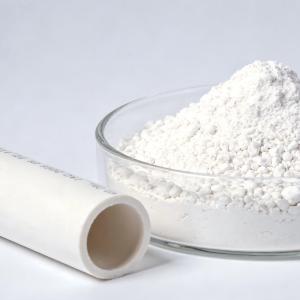
(III) Applications: Widely used in water-based coatings and ink formulations to provide excellent abrasion resistance, anti-blocking, and scratch resistance properties. In plastic processing, it offers balanced internal and external lubrication for PVC, and in rigid transparent and opaque PVC formulations, its lubricating properties are superior to other lubricants. It is extensively applied in PE and PVC cable production, as well as PVC profile and pipe manufacturing, making it an excellent new plastic processing lubricant. It can also be used as raw material for textile softeners, car wax, and leather softeners.
5. Technical Specifications
The product is non-toxic, non-corrosive, and exhibits good chemical stability with excellent compatibility with rubber, plastic, and paraffin materials. Appearance: light yellow powder; Acid Value: 7-26 mg KOH/g; Melting Point: 98-104°C; Density: 0.95 g/cm³.
Related News